Best overall: Glossy Cal Vinyl for opaque window graphics. Best for clear-background artwork: Clear Cal Vinyl. Best for a non-gloss finish: Matte Cal Vinyl. For 2026, choose the best calendered vinyl for car decals by finish, adhesive, and installation position—not by thickness alone.
TL;DR
Glossy Cal Vinyl is the best calendered vinyl for car decals needing an opaque, glossy background.
Clear Cal Vinyl suits transparent-background artwork; confirm white ink and print orientation before ordering.
Matte Cal Vinyl offers a non-gloss finish, but its permanent adhesive does not make it removable.
Brooklyntransfers offers CAL vinyl options; confirm vehicle-glass suitability and exposure requirements before placing repeat orders.
Why this matters
A car-window decal has two jobs: carry the message and work on the intended glass surface. A finish that looks right in a proof does not settle adhesive choice, viewing direction, or outdoor exposure.
Brooklyntransfers is best for print shops and apparel brands ordering custom CAL vinyl alongside DTF transfers. Start with the material selection at Brooklyntransfers, then specify the actual installation rather than ordering from a thumbnail alone.
For a 2026 production order, write down whether the decal goes inside or outside the window, whether the background must remain transparent, and whether removal is part of the job. Those answers eliminate unsuitable materials before artwork reaches production.
What makes the best calendered vinyl for car decals?
Judge these options against the same criteria:
Glass suitability: Confirm that the complete printed construction is appropriate for the intended vehicle-glass installation.
Background: Choose an opaque field when the artwork needs separation from the view through the window; choose clear deliberately.
Finish: Glossy and matte surfaces produce different appearances. Match the finish to the approved sample.
Adhesive: Permanent adhesive and adhesive-free cling serve different jobs. Do not substitute one without approval.
Viewing direction: Outside-applied and inside-facing-out graphics require different artwork and print planning.
Exposure requirements: Confirm outdoor suitability, protective finishing, and care instructions for the finished decal.
No supplied product description establishes a vehicle-specific service life. Treat the ranking as a buying shortlist, not a warranty for every automotive application.
Best car-window decal materials at a glance
The first three options are permanent-adhesive CAL vinyl selections. White Static Cling is a separate, adhesive-free alternative for jobs where permanent bonding is not the objective.
Rank and material
Best for
Standout feature
Key limitation
1. Glossy Cal Vinyl
Opaque, glossy window graphics
3 mil calendered vinyl with permanent adhesive
Gloss finish does not establish outdoor service life
2. Clear Cal Vinyl
Transparent-background artwork
3 mil clear calendered vinyl with permanent adhesive
Artwork contrast and white-ink requirements need approval
Adhesive-free construction is not equivalent to permanent bonding
1. Glossy Cal Vinyl: best for opaque window graphics
Glossy Cal Vinyl is a 3 mil pressure-sensitive calendered vinyl with permanent adhesive and a glossy finish. It is the default shortlist choice when your artwork needs an opaque background rather than a transparent field.
The practical benefit is background control: the design does not depend on a clear substrate to create its intended appearance. Confirm the finished decal's suitability for the specified vehicle window before committing a repeat run.
Glossy Cal Vinyl pros:
Opaque background separates the artwork from the view through the glass.
Glossy finish gives the job a defined surface appearance.
Permanent adhesive matches jobs specified for bonded installation.
Glossy Cal Vinyl cons:
The opaque field blocks the view wherever the decal covers glass.
Permanent adhesive is the wrong starting point for a job specified as adhesive-free.
The supplied description does not establish automotive exposure limits or a removal guarantee.
Best for: Shop logos, promotional graphics, and other window artwork designed around an opaque, glossy field.
Approve the actual finish and intended mounting side, not just the digital artwork. Verdict: Buy for an approved opaque-window application; hold if outdoor suitability remains unconfirmed.
2. Clear Cal Vinyl: best for transparent-background artwork
Clear Cal Vinyl is a 3 mil pressure-sensitive calendered vinyl with permanent adhesive. Its description identifies it as water-resistant, but that is not a complete specification for every exterior car-window job.
Choose clear material when the transparent areas are part of the design. Ask how the artwork will reproduce against the actual window, especially when the glass is dark or the vehicle interior changes the background.
Clear Cal Vinyl pros:
Clear substrate supports artwork designed without an opaque surrounding field.
Permanent adhesive suits a bonded installation brief.
The product description explicitly identifies water resistance.
Clear Cal Vinyl cons:
Clear material does not create an opaque white background by itself.
Print orientation matters when the graphic is mounted inside and viewed outside.
Water resistance alone does not establish wash resistance or outdoor service life.
Best for: Window graphics whose transparent areas are intentional and whose contrast has been checked against the glass.
For your 2026 reorder file, record whether white ink is required and confirm whether the supplied print configuration supports it. Do not assume white artwork in the file automatically becomes white ink. Verdict: Buy after contrast and print construction are approved; hold if either is unresolved.
3. Matte Cal Vinyl: best for a non-gloss finish
Matte Cal Vinyl is a 4 mil pressure-sensitive calendered vinyl with permanent adhesive and a matte finish. Select it because the approved design calls for a non-gloss surface—not because it is thicker than the glossy option.
The 4 mil specification describes thickness, not a durability ranking. It does not establish better adhesion, easier removal, or longer automotive service than another construction.
Matte Cal Vinyl pros:
Matte finish matches briefs that exclude a glossy surface.
Opaque material gives the artwork a defined background.
Permanent adhesive supports jobs specified for bonded installation.
Matte Cal Vinyl cons:
It cannot provide the transparent field of clear vinyl.
Permanent adhesive does not meet an adhesive-free brief.
Thickness alone does not establish suitability for a curved or exposed application.
Best for: Opaque window decals where the approved sample requires a matte surface.
Keep finish approval separate from installation approval. A good-looking sample does not answer whether the complete construction meets the intended exposure. Verdict: Buy for an approved matte-finish application; skip when transparency is essential.
4. White Static Cling: best for adhesive-free glass graphics
White Static Cling is a 7-mil calendered white film that requires no adhesive. Its description identifies glass as an application surface, making it a distinct option when the brief calls for cling rather than permanent adhesive.
This is an alternative to the permanent-adhesive selections, not a direct replacement. Confirm mounting position and intended conditions before specifying it for a moving vehicle.
White Static Cling pros:
Requires no adhesive.
White film provides an opaque background.
Glass application is explicitly identified in its description.
White Static Cling cons:
It does not provide a transparent background.
Adhesive-free cling does not satisfy a permanent-bond specification.
The supplied description does not establish suitability for exterior use on moving vehicles.
Best for: Temporary glass graphics where adhesive-free application is a stated requirement and the installation has been approved.
Do not replace permanent vinyl with cling simply because the artwork looks identical. Verdict: Buy for an approved adhesive-free glass application; skip as an unverified exterior-vehicle substitute.
How the materials were ranked
This 2026 shortlist prioritizes background, finish, adhesive, and the clarity of the application brief. Glossy Cal Vinyl takes the default position for opaque glossy artwork; Clear Cal Vinyl and Matte Cal Vinyl each address a different visual requirement.
White Static Cling ranks separately because it changes the attachment method. No ranking here implies measured superiority in weathering, adhesion, washing, or removal.
Build a production brief that survives the reorder
A repeat order should reproduce the approved construction, not reopen material selection. Brooklyntransfers CAL vinyl orders need a clear brief that separates artwork decisions from installation requirements.
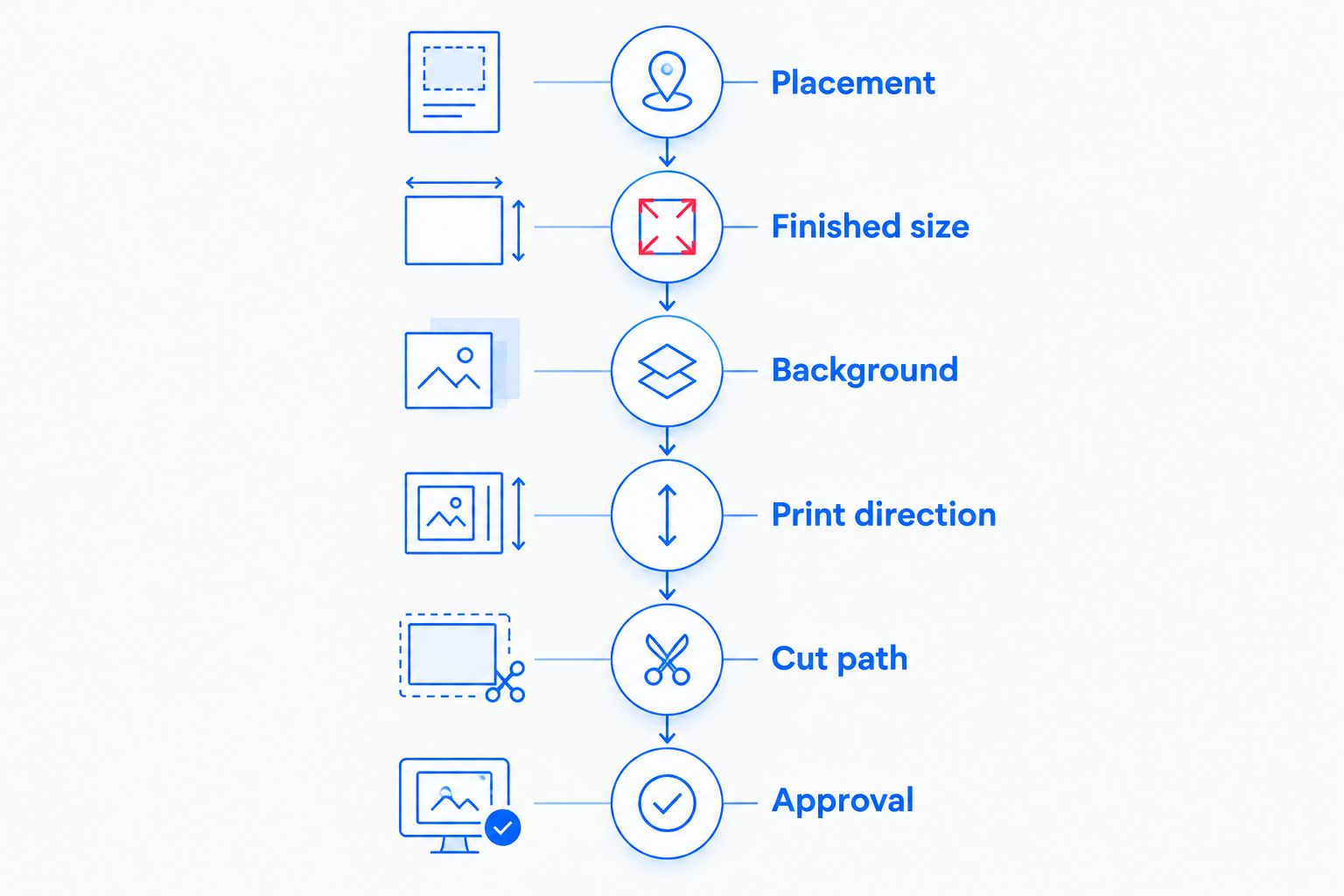
Use this sequence before submitting the job:
Placement: Identify the intended window and mounting side. Check applicable visibility restrictions before setting the coverage area.
Finished size: State the final width and height with units. Do not rely on a preview image to communicate scale.
Background: Specify opaque or clear, including any white-ink requirement that needs confirmation.
Print direction: State whether viewers read the graphic through the glass or directly from the printed side.
Cut path: Identify the intended cut contour and confirm the required bleed and safe-area specifications.
Approval: Save the approved proof and material choice together so the next order uses the same instructions.
Set mounting position and background before approving the print file.
Keep orientation explicit in the order notes. Inside-mounted artwork viewed through glass is not the same production instruction as an outside-mounted decal viewed directly.
For 2026 repeat work, retain the approved file version rather than rebuilding from an old screenshot. A screenshot does not preserve the original dimensions, cut-path information, or background settings.
Match care instructions to the finished construction
Material selection is incomplete until the installer knows how to handle the finished print. Ask for installation and cleaning instructions covering the actual vinyl, adhesive, ink, and any protective finish supplied with the job.
The same distinction matters when washing a new vinyl wrap: the care question concerns the installed construction, not just whether the surface is called vinyl. Do not copy a wrap-care interval into a window-decal job unless the supplier confirms it applies.
Use the handoff to settle these operational questions:
Which glass-preparation method does the supplier specify?
What installation conditions apply to the finished decal?
What cleaning methods should the customer avoid?
Does the job require a protective finish, and what does that finish change?
What removal instructions apply to the selected adhesive or cling film?
Do not promise residue-free removal for permanent adhesive, and do not translate water resistance into a pressure-washing claim. Both promises require support for the actual construction.
Choose the material before placing the order
Order the finish that solves the brief, then confirm the application requirements. Brooklyntransfers offers the glossy, clear, and matte CAL vinyl options below; each answers a different background or surface-finish requirement.
4 mil pressure-sensitive calendered vinyl with permanent adhesive and a matte finish.
$1.50
Which car-window decal material should you choose?
Choose Glossy Cal Vinyl by default when the brief calls for opaque, glossy artwork. Switch to Clear Cal Vinyl for intentional transparency or Matte Cal Vinyl for an approved non-gloss finish. Choose White Static Cling only when adhesive-free application is part of the specification.
For every option, settle vehicle-glass suitability before production. The best material is the one that meets the complete installation brief, not the one with the thickest film.
FAQ
What's the best calendered vinyl for car decals?
Glossy Cal Vinyl is the default shortlist choice for opaque, glossy car-window artwork. Confirm suitability for the intended vehicle glass, mounting side, and exposure before ordering.
Is clear vinyl better than white vinyl for car windows?
Clear vinyl is better when transparent areas are part of the design; opaque vinyl is better when the artwork needs a defined background. Check contrast against the actual glass and confirm any white-ink requirement.
Is thicker calendered vinyl better for car decals?
Thickness alone does not establish a better car decal. Glossy Cal Vinyl and Clear Cal Vinyl are 3 mil, while Matte Cal Vinyl is 4 mil; choose by application, finish, and adhesive requirements.
Can I put a printed decal inside a car window?
An inside-mounted decal needs the correct viewing direction and print construction. Confirm that the selected material and printing configuration support an inside-facing-out application before submitting artwork.
Does permanent vinyl come off without residue?
Permanent adhesive does not establish residue-free removal. Obtain removal instructions for the specific finished decal rather than promising clean removal to your customer.
Is static cling the same as permanent window vinyl?
No. White Static Cling requires no adhesive, while the glossy, clear, and matte CAL vinyl options use permanent adhesive. Confirm the cling film's suitability for the intended mounting position and conditions.
Can I use the same care instructions for a wrap and a window decal?
Use the same instructions only when the supplier confirms they apply to both finished constructions. Vinyl type, adhesive, ink, and protective finishing must match the care guidance.
One last thing
Transparent material does not make the printed graphic transparent. Ink coverage, white ink, and print orientation still determine what the viewer sees. Approve the intended appearance against the glass before turning a sample into a repeat order.