Best vinyl decal materials for laptop and gear branding
Best overall: Matte Cal Vinyl. Best for a glossy finish: Glossy Cal Vinyl. Best for showing the surface around your artwork: Clear Cal Vinyl. These are the best vinyl decals for laptop branding by finish and background treatment; this 2026 guide helps you choose from Brooklyntransfers without confusing material thickness with proven service life.
TL;DR
Matte Cal Vinyl is the default pick among the best vinyl decals for laptop branding when you want a matte finish.
Glossy Cal Vinyl suits glossy branding; its permanent adhesive makes removal expectations part of the buying decision.
Clear Cal Vinyl suits transparent-background designs, but the laptop surface becomes part of the artwork.
Brooklyntransfers vinyl decals suit print shops choosing materials by finish, surface, and artwork requirements.
Why this matters
A laptop decal order is not just a print-file decision. Finish changes the look, the background changes how the artwork reads, and adhesive affects what happens when branding needs replacing.
For a 2026 equipment-branding order, separate appearance requirements from performance requirements. A matte surface is an appearance choice; clean removal, abrasion resistance, and compatibility with a particular laptop coating require separate confirmation. Do not sell an appearance specification as a durability guarantee.
What makes the best vinyl decals for laptop branding?
Use these criteria before choosing a material or approving repeat orders:
Finish: Choose matte or glossy deliberately. Match the approved brand presentation rather than letting the material decide it.
Background: Decide whether the decal should cover its footprint or let the equipment surface show around the printed artwork.
Adhesive: Glossy Cal Vinyl and Clear Cal Vinyl specify permanent adhesive. Do not promise clean removal from either.
Surface compatibility: Confirm the actual application surface, including coatings and texture. A smooth lid and a textured equipment case are different jobs.
Handling requirements: Ask about rubbing, cleaning, and exposure. Water resistance alone does not establish resistance to solvents or repeated abrasion.
Repeat-order control: Record the material, finished dimensions, artwork version, and approval reference so the next run matches the intended specification.
Brooklyntransfers lists material specifications, but those specifications do not establish performance on every device. Ask for confirmation when a customer requires a particular cleaning routine, removal behavior, or exposure rating.
A matte finish does not establish clean removal or scratch resistance
2. Glossy Cal Vinyl
Branding that calls for a glossy finish
3 mil pressure-sensitive calendered vinyl with permanent adhesive
Permanent adhesive is a poor match for an unqualified removable-branding promise
3. Clear Cal Vinyl
Designs that use the device surface as their background
3 mil clear pressure-sensitive calendered vinyl with permanent adhesive
Final appearance depends on the underlying surface and print configuration
The table compares material descriptions, not application-test results. Thickness identifies construction; it does not rank outdoor life, scratch resistance, or suitability for a specific device coating.
1. Matte Cal Vinyl: best laptop decals for a matte finish
Matte Cal Vinyl is a 4 mil pressure-sensitive calendered vinyl with a matte finish. Choose it when the approved branding calls for matte rather than glossy presentation.
Matte Cal Vinyl is the default Brooklyntransfers choice for laptop branding when a matte finish is the brief. That recommendation is about appearance, not an unsupported claim that the material outlasts the alternatives.
Matte Cal Vinyl pros:
Its specified matte finish gives purchasing and production a clear selection criterion.
The 4 mil material specification can be recorded against the job for repeat orders.
It offers a distinct finish option alongside glossy and clear materials.
Matte Cal Vinyl cons:
Matte appearance does not establish resistance to scratches, cleaning chemicals, or bag friction.
Its listed description does not establish clean-removal performance on laptop coatings.
It is the wrong finish when the customer explicitly approves a glossy presentation.
Best for: Print shops and apparel brands whose laptop or equipment branding calls for a matte finish.
For a 2026 reorder, retain the approved physical sample rather than relying only on an on-screen mockup. Screens cannot reproduce the surface finish you are buying. Ask the customer to approve the material as well as the artwork.
Verdict: Buy Matte Cal Vinyl for a matte-finish brief; hold the order if removable branding is a requirement that has not been confirmed.
2. Glossy Cal Vinyl: best laptop decals for a glossy finish
Glossy Cal Vinyl is a 3 mil pressure-sensitive calendered vinyl with permanent adhesive and a glossy finish. It fits a job where the buyer wants the printed decal to have a glossy surface.
Treat the permanent adhesive as a buying condition, not a footnote. Equipment owners need to approve that choice before branded decals are distributed to staff, customers, or event teams.
Glossy Cal Vinyl pros:
Its glossy finish directly matches briefs that specify gloss.
Permanent adhesive is explicitly identified in the product description.
Its 3 mil construction gives you a concrete material specification for the purchase record.
Glossy Cal Vinyl cons:
Permanent adhesive does not support a promise of residue-free removal.
Gloss is unsuitable when the approved appearance calls for matte.
The listed description does not establish abrasion resistance or compatibility with a particular device coating.
Best for: Laptop and smooth gear branding where the customer wants a glossy finish and accepts permanent adhesive.
Do not describe Glossy Cal Vinyl as a removable laptop sticker. If equipment rotates between staff or belongs to a leasing company, settle the removal requirement first. A visually correct decal can still be the wrong operational choice.
Verdict: Buy Glossy Cal Vinyl for approved glossy branding; skip it when clean removal is a firm, unverified requirement.
3. Clear Cal Vinyl: best laptop decals for visible backgrounds
Clear Cal Vinyl is a 3 mil pressure-sensitive calendered vinyl with permanent adhesive. Its description also identifies water resistance, which is useful information but not a waterproofing or chemical-resistance rating.
Choose clear material when the equipment surface should remain visible around the printed artwork. The background then becomes part of the design: the same file needs review against each intended surface color.
Clear Cal Vinyl pros:
The clear material supports designs that leave the surrounding equipment surface visible.
Permanent adhesive is explicitly specified.
Water resistance is stated in the material description.
Clear Cal Vinyl cons:
Artwork appearance depends on the background and the confirmed print configuration.
Permanent adhesive does not establish clean-removal behavior.
Water resistance does not establish suitability for solvent cleaning, immersion, or heavy abrasion.
Best for: Logos and graphics designed around a visible device background rather than a solid surrounding panel.
Before ordering, ask how white artwork and white backing are handled. Do not assume that a transparent file automatically produces the appearance shown in a mockup. Confirm the intended result on both light and dark equipment where relevant.
Verdict: Buy Clear Cal Vinyl when the visible background is intentional; hold until the artwork and backing treatment are confirmed.
Choose the material before placing the order
Brooklyntransfers offers these three material choices. Match the approved finish to the product, then resolve any unanswered surface, adhesive, or print questions before submitting the production file.
3 mil clear pressure-sensitive calendered vinyl with permanent adhesive; described as water-resistant.
$1.50
Prepare the file for repeatable laptop branding
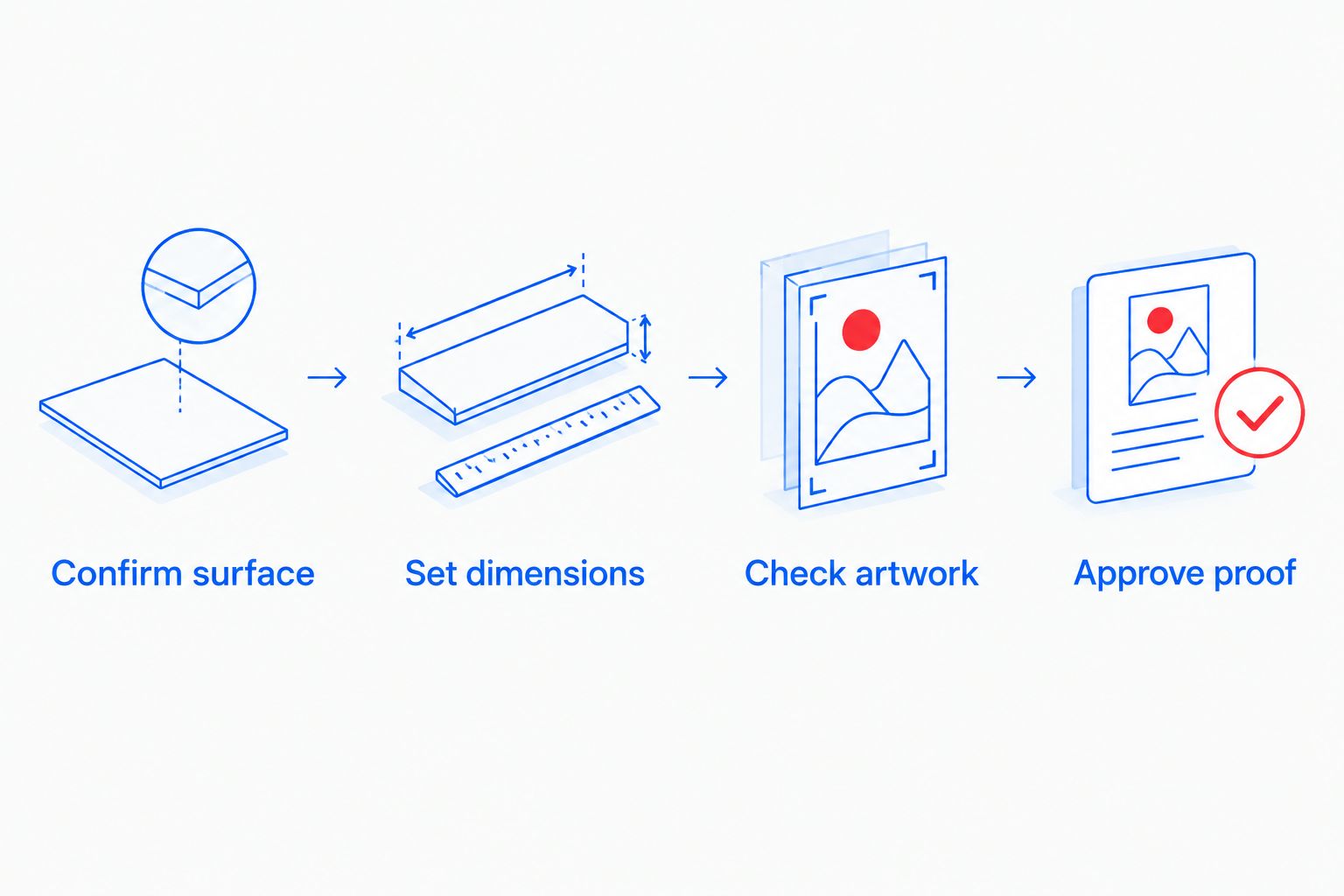
Use the same approval sequence for every 2026 equipment-branding order. The goal is a repeatable specification, not just a file that opens successfully.
Confirm surface
Record the actual application surface and its finish. Ask whether the decal goes on a laptop lid, a separate protective case, or another piece of gear; do not treat those surfaces as interchangeable.
Keep decals away from vents, ports, hinges, and labels that must remain readable. Confirm any device-owner restrictions before treating the placement as approved.
Set dimensions
Specify the finished width and height in the order record. Measure the available flat area rather than estimating from a photograph.
If the same logo goes on several devices, check each placement area. Do not scale the file casually between orders and assume fine details will remain equally readable.
Check artwork
Supply the artwork at the intended finished size and check the supplier's current file requirements. Inspect transparent areas, small lettering, thin lines, and any unwanted background rectangle.
For clear material, identify which areas should remain transparent and which should print as part of the design. Ask how the production setup handles those areas before approving the file.
Approve proof
Approve the artwork version, dimensions, material, and intended background together. Keep the approval reference with the job so a reorder does not depend on someone remembering the original selection.
For an unfamiliar surface or a demanding use case, request a sample before committing the full run. A sample review is more useful than assuming a material name answers every application question.
Approve the material, dimensions, artwork, and background as one job specification.
Separate decal production from apparel production
A brand launch can include laptop decals and decorated shirts, but they require separate material and production decisions. DTF transfers and gang sheets are apparel-decoration orders, not substitutes for pressure-sensitive laptop decals.
Keep the specifications separate even when both jobs use the same logo. A file prepared for a garment placement still needs its dimensions and background treatment checked for a decal.
Brooklyntransfers states that DTF orders placed by 1:00 PM Eastern ship or are ready for pickup the same day. That is dispatch or pickup readiness, not same-day delivery, and it is not a stated turnaround for these vinyl decal materials.
For your 2026 launch schedule, confirm the decal production schedule separately. Do not use an apparel-order cutoff to promise a decal handoff date.
How these materials are ranked
The ranking prioritizes the requested appearance, background treatment, adhesive information, and repeat-order clarity. Matte Cal Vinyl is the default only when a matte finish suits the brief; Glossy Cal Vinyl and Clear Cal Vinyl win their distinct use cases.
No ranking here depends on invented wear tests, removal tests, or competitor comparisons. A material's stated thickness is not evidence of a longer working life.
Which laptop decal material should you choose?
Choose Matte Cal Vinyl if you need a starting point and want a matte finish. Choose Glossy Cal Vinyl when gloss is specified, or Clear Cal Vinyl when the equipment surface should remain visible around the artwork.
If the non-negotiable requirement is clean removal, stop before buying. Confirm that requirement for the actual surface instead of treating any of these materials as a verified removable option.
FAQ
What's the best vinyl decal material for laptop branding?
Matte Cal Vinyl is the default recommendation when your laptop branding calls for a matte finish. Choose Glossy Cal Vinyl for gloss or Clear Cal Vinyl when the device surface should show around the artwork.
Is matte vinyl better than glossy vinyl for laptop logos?
Matte vinyl is better when the approved appearance calls for matte; glossy vinyl is better when it calls for gloss. Neither finish alone establishes better durability or easier removal.
Can I remove these laptop decals without leaving residue?
Clean removal is not established for these materials. Glossy Cal Vinyl and Clear Cal Vinyl specify permanent adhesive, so confirm removal requirements before ordering.
Will a clear vinyl logo look the same on every laptop?
A clear vinyl logo needs review against each intended background. Confirm how white artwork and backing are printed rather than assuming a transparent file will look identical on light and dark surfaces.
Is Clear Cal Vinyl waterproof?
Clear Cal Vinyl is described as water-resistant, not waterproof. That description does not establish immersion resistance, solvent resistance, or suitability for a particular cleaning routine.
Does thicker decal vinyl last longer?
Thickness alone does not establish longer service life. Matte Cal Vinyl is listed at 4 mil, while Glossy Cal Vinyl and Clear Cal Vinyl are listed at 3 mil; application performance requires separate confirmation.
Does the same-day DTF cutoff apply to vinyl decals?
The stated 1:00 PM Eastern cutoff applies to DTF dispatch or pickup readiness, not a confirmed vinyl decal turnaround. Confirm the decal schedule separately and do not promise same-day arrival.
One last thing
Keep the approved sample with the reorder record, not just the artwork file. The file records the design; the sample records the finish the customer actually accepted. For 2026 repeat orders, that distinction gives purchasing and production a shared reference when someone asks for the same decals again.